

I've been involved in machine knitting for several years. Starting out with purely manual techniques, I eventually moved on to knitting machines, trying out various models from SilverReed along the way. Looking back, I realize that when I was first choosing a machine, I was easily swayed by flashy features-I was dead set on getting the top-tier model with all the bells and whistles.
It was only after I actually started using these machines that I understood: the key to choosing the right knitting machine is finding one that aligns with your actual knitting habits, rather than just chasing the highest specifications.
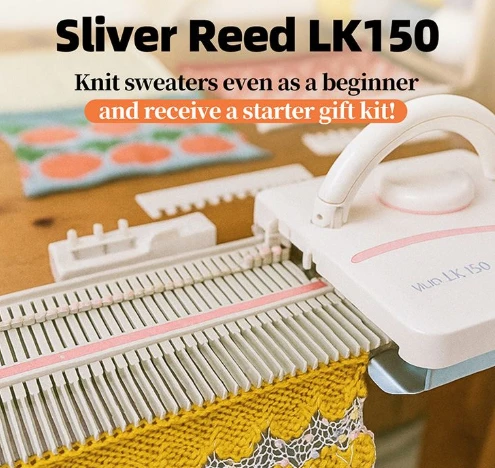
Many friends of mine who are new to machine knitting often consider the LK150 as their first machine. That's where I started, too-learning the fundamental logic of machine knitting. It's lightweight and compact, making it easy to move over to a window or tuck away into a cupboard. Since you select the needles manually-without the need for a punch-card system-the learning curve is much more manageable. With a 6.5mm needle gauge, it's well-suited for medium-weight yarns, producing a thick, soft fabric that's perfect for items like scarves, cardigans, and blankets. For beginners, it's a great way to build a solid foundation-mastering essentials like casting on, adjusting yarn tension, and fixing dropped stitches. That said, its limitations are clear: it struggles with complex jacquard or openwork patterns. If you're someone who loves creating intricate designs, you'll likely find the LK150 insufficient after a while.
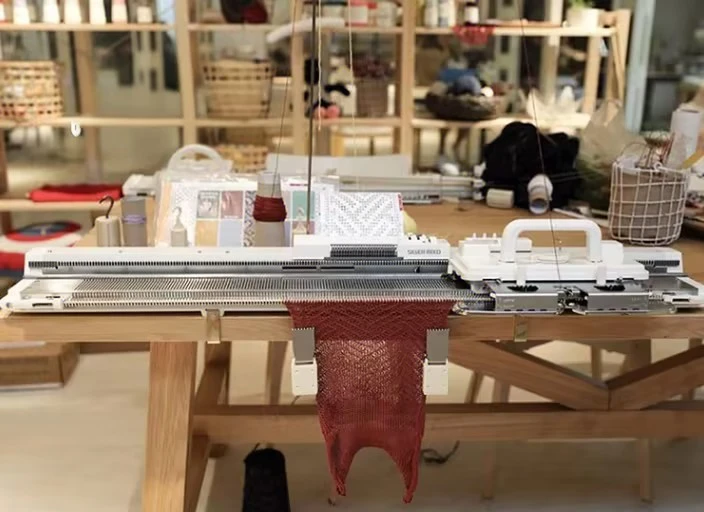
Once I had mastered the basics and wanted to explore lace and multi-color jacquard, I picked up an SK280. It features a punch-card system; you simply insert a pattern card, and the machine automatically selects the needles for you. This makes creating openwork and jacquard patterns so much easier-no need to manually adjust each needle. Its finer 4.5mm gauge is ideal for delicate yarns like fine wool or cashmere, resulting in a smooth, refined fabric with a high-quality finish. It is quite heavy, though; I've set up a dedicated workstation for it, so I rarely move it around.

And here's the biggest mistake I made early on: as soon as I ordered the main unit, I impulsively bought every single carriage accessory available. Accessories like the LC-2 lace carriage, AG24 intarsia carriage, YC-6 four-color yarn changer, and SRJ70 ribber attachment are all very tempting. However, once I actually owned them, I realized that I mostly stick to single-color stockinette stitch and simple jacquard patterns. I rarely make lace or double-sided (ribbed) fabrics, so several of these accessories have just sat idle-a complete waste of money. My advice now is to purchase accessories gradually, only as the need arises. Wait until you are certain that you frequently create a specific type of pattern before investing in the corresponding carriage.

Learning which yarns work with which machines was also a process of trial and error for me. If you force thick yarn into a fine-gauge machine, you'll constantly deal with broken threads and jammed needles; conversely, if you use thin yarn on a coarse-gauge machine, the resulting fabric will be loose and shapeless. Before buying a machine, take a look at your existing yarn stash-do you mostly use medium-weight yarns or fine, worsted-style yarns? Match your machine to the materials you actually use, so you don't end up with a machine that can't handle your go-to yarns.
Another factor I value highly is expandability. With machines like those from Silver Reed, the main unit and the functional accessories are separate. If the main unit is in good condition, you can expand your capabilities later by simply adding a new carriage or a ribber attachment, rather than having to replace the entire machine-it offers much greater flexibility.
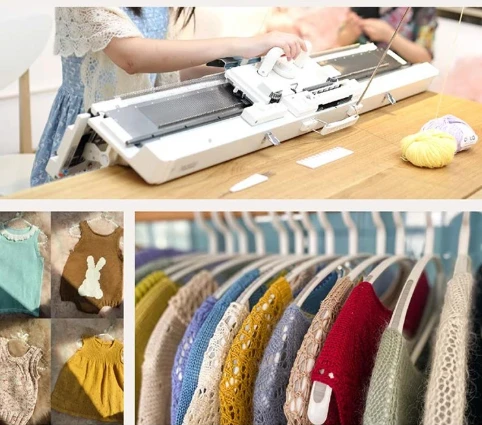
Knitting is a hobby that should be pursued at your own pace. No single knitting machine can do everything, so there's no need to envy someone else's "complete" set of accessories. Figure out what you want to create and how much time you're willing to invest in mastering the craft; making your choice based on that will ensure your machine truly becomes a seamless part of your daily knitting routine.